
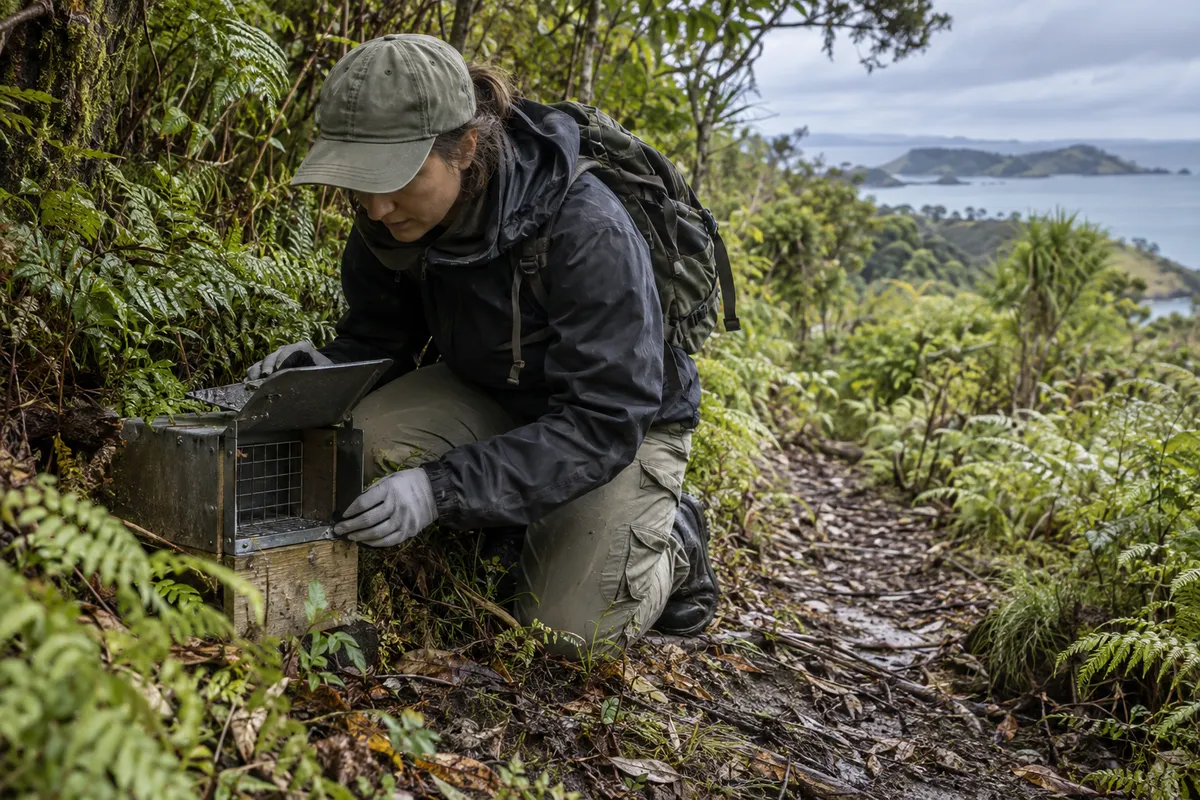
On Waiheke Island, a tourist destination in New Zealand, conservationists are trying to do something no urban island has done: rid themselves of the stoat. According to the New York Times, more than 280 of the introduced predators have been trapped since 2020. What remains are the hardest ones to find, the animals described as "shy."
You may never trap a stoat. But the way this project has moved from easy wins to a stubborn last stretch is a useful picture of how any long effort works, whether it's a health habit, a personal project, or a change in how you live. Here's what the hunt can teach you about finishing.
The Problem Is Real, and So Is the Stakes
The stoat is an introduced predator that, per the Times, has ravaged New Zealand's endemic wildlife. The reporting notes that invasive species continue killing millions of native birds each year, which is why New Zealand is intensifying predator-control efforts.
That framing matters for any big goal. People stick with hard things when they can name what's at stake. Waiheke's effort isn't abstract tidiness; it's about protecting birds found nowhere else. Write down, in one sentence, what your own goal protects or makes possible. Keep it where you'll see it.
Early Progress Is the Easy Part
More than 280 stoats trapped since 2020 is a substantial number. But the Times describes the current phase as the difficult one: the last remaining animals are "shy," meaning they avoid the traps that caught their neighbors.
This is the pattern in almost every long project. The first 80 percent comes from the standard method. The final stretch demands something different. If you've ever hit a plateau after a strong start with a new eating routine, a meditation practice, or a fitness plan, you've met your own trap-shy stoat.
What to do when you hit that stage:
- Expect it. A slowdown isn't proof the method failed. It's a sign you've handled the easy cases.
- Change the tactic, not the goal. The Times describes the effort as detective-like, which suggests adapting rather than repeating what already worked.
- Track what you learn. Hunting an elusive animal means paying close attention to small signs. Notes on what's working in your own routine do the same job.
Why Community Support Matters
The reporting highlights community support as part of the project. Waiheke is a place where people live and visit, not a remote reserve, so the work depends on residents being on board.
The personal-growth parallel is plain: hard goals in a populated, busy setting go better with other people involved. Tell a friend or family member what you're working on. Ask a neighbor to join a walking habit, or a coworker to share a lunch plan. Effort that's visible to others is harder to quietly drop.
A Test Case for Doing Good in Ordinary Places
Per the Times, Waiheke could become the first urban island to eliminate stoats, making it a high-profile test for conservation in populated tourist destinations. The lesson isn't limited to wildlife. Big change doesn't have to wait for a perfect, empty setting. It can happen amid traffic, visitors, and daily life.
That's encouraging if your own life feels too crowded for self-improvement. You don't need a retreat or a clean slate. You can work on mindfulness, nutrition, or sleep in the middle of a regular schedule, by adding small, repeatable actions.
Your Takeaways From the Hunt
Here's a simple way to apply this to your own long effort:
- Name the stakes in one sentence.
- Celebrate the count. Waiheke's 280-plus is real progress; list yours.
- Plan for the shy last stretch. Decide now that when results slow, you'll adjust your approach instead of quitting.
- Recruit your people. Make your goal something others can see and support.
Whether Waiheke ultimately becomes stoat-free remains to be seen, and the Times frames it as a question rather than a certainty. That honesty is part of the lesson too: you can commit fully to a goal without knowing it will succeed.
Pick one goal you've let stall, identify its "shy" final piece, and try one new tactic on it this week.