BuzzFeed Shopping recently published a roundup of 26 shoes that reviewers say keep their feet blister free, aimed at everyday wear, travel, walking, and long days on your feet. The post doesn't spell out its individual picks in the material available here, so this isn't a rundown of those shoes. Instead, it's a guide to the skill underneath the roundup: how to judge a comfort claim, and how to set yourself up so your next pair doesn't leave you limping.
By the end, you'll have a shopping checklist, a break-in routine, and a way to read reviews that separates real comfort from wishful thinking.
Why Review-Driven Shopping Works (and Where It Falls Short)
Shoppers want proof from real users before buying, and that instinct is sound. A person who has walked through an airport or stood through a work shift in a shoe tells you something a product page can't.
But a review describes one person's feet. Treat reviewer praise as a shortlist generator, not a verdict. A shoe with glowing comfort reviews is worth trying; it isn't guaranteed to fit you.
How to read a comfort review
- Look for activity details. "Walked all day on vacation" tells you more than "so comfy."
- Check for your foot type. Reviewers who mention wide feet, high arches, or narrow heels are giving you usable information.
- Scan for the break-in story. Does the reviewer say they were comfortable out of the box, or after a couple of weeks? Both can be fine, but you should know which you're buying.
- Read the middle ratings. Three-star reviews often name the exact spot where a shoe rubs.
Shop for Fit Before Style
Blisters come from friction, and friction comes from movement inside the shoe. Fit is the first thing to control.
Try shoes on at the end of the day
Feet tend to swell as the day goes on. Trying shoes on in the late afternoon or evening gives you a more honest read on how they'll feel during long walking days.
Do the in-store (or living room) test
- Wear the socks you'll actually wear with them.
- Walk on a hard surface for several minutes, not just a lap of the carpet.
- Notice your heel. If it lifts or slides with each step, that's friction waiting to happen.
- Check your toes. You should be able to wiggle them without them pressing against the front or sides.
- Pay attention to any spot that feels even slightly tight. Small hot spots become blisters over a long day.
Buy with return policies in mind
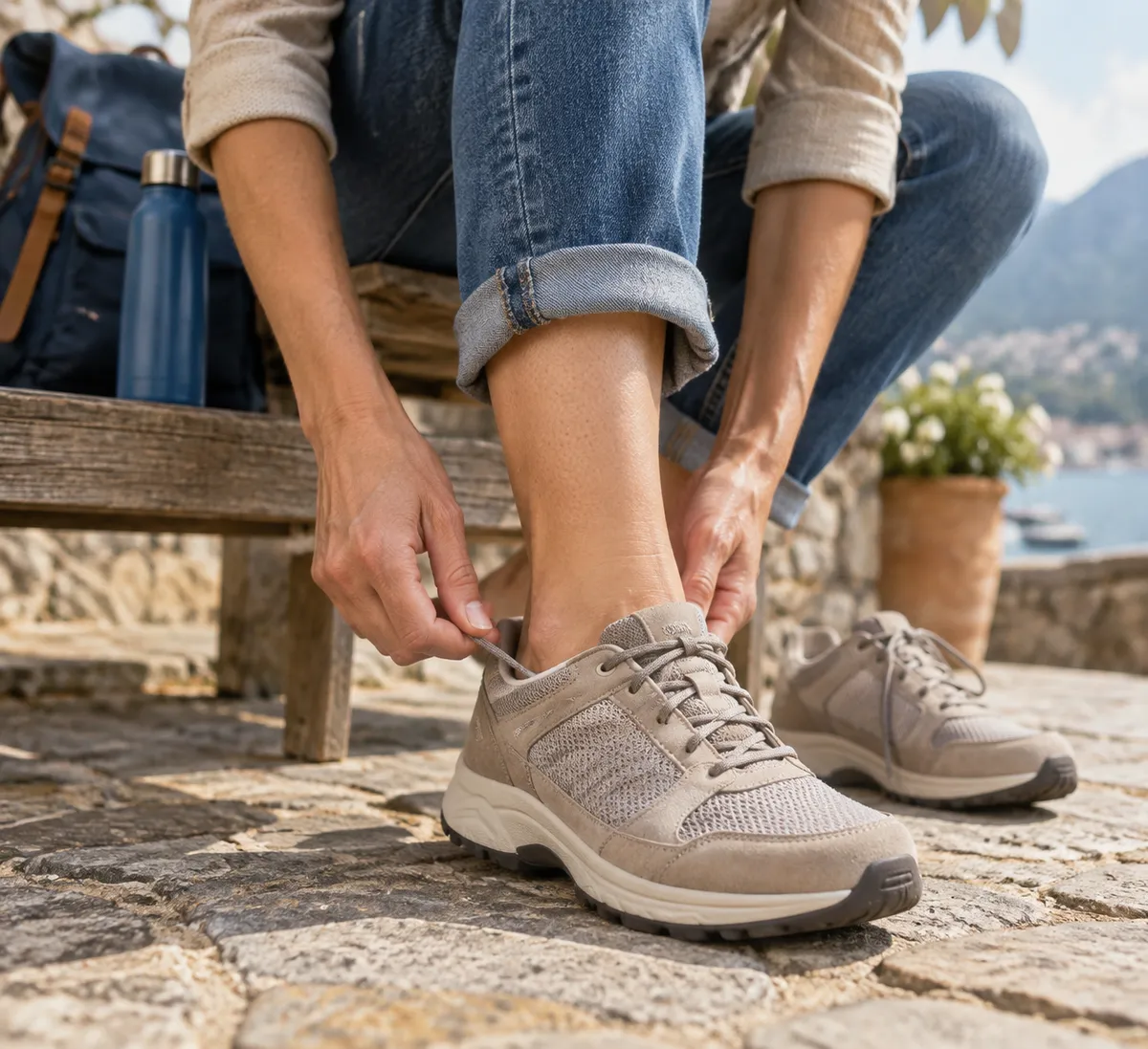
When ordering online, check the return policy first. Wear new shoes indoors on a clean surface for a day or two before committing, so you can send them back if they rub.
Break In Shoes Before the Big Day
The classic mistake is wearing brand-new shoes to the event, trip, or first day of a travel itinerary. Build in a runway.
- Days 1 to 3: Wear them around the house for an hour or two.
- Days 4 to 7: Take them on short errands or a 20-minute walk.
- Week two: Try a longer outing, with a backup pair in your bag.
This gradual approach lets you find problem spots while you still have time to fix them or swap the shoes.
Build a Blister-Prevention Kit
Even great shoes can misbehave on a long day. A small kit is cheap insurance for travel and city days.
- Moisture-managing socks. Damp skin rubs more easily, so choose socks designed to keep feet dry.
- Blister bandages or moleskin. Apply them to known hot spots before they hurt, not after.
- Anti-chafe balm or stick. Useful on heels and toes where skin tends to rub.
- A spare pair of socks. Changing into dry ones midday can reset a sweaty foot.
Match the Shoe to the Day
The BuzzFeed roundup covers everyday wear, travel, walking, and long days on your feet, which is a useful reminder that "comfortable" depends on the job the shoe has to do. Ask yourself what the day demands.
Travel days
You'll walk more than you expect, often on hard floors and uneven pavement. Pick shoes you've already broken in, that slip off easily for security lines if needed, and that you can wear for hours without adjusting.
Workdays and commutes
If you're standing or covering distance in between, prioritize a secure heel and room for your toes. Keep a pair at work if you commute in different shoes.
Dressy occasions
Weddings and events are where style tends to beat sense. Wear the shoes around the house first, and pack a comfortable backup or blister bandages.
Listen to Your Feet Early
A warm, rubbing sensation is your cue to act. Stop, adjust your sock, add a bandage, or change shoes. Pushing through a hot spot is how a minor irritation becomes a painful blister that sidelines the rest of your trip.
If you get blisters often even in well-fitting shoes, or you have a condition such as diabetes that affects your feet, talk to a doctor or podiatrist rather than relying on shoe reviews alone.
Your Next Step
Before you click "buy" on any reviewer-loved pair, pick one shoe from a shortlist, read the three-star reviews, and plan a one-week break-in. Do that, and your adventures are far likelier to be about the destination instead of your heels.