If you could add just one small exercise to your day to support balance, coordination and healthy aging, would it be worth two minutes? Womanandhome recently reported on a physiotherapist who recommends one Pilates move above all others for exactly that: the scooter exercise with rotation. This guide covers why balance work matters, how to try the move, and how to make it harder as you get steadier.
Why This Move Is Getting Attention
Per Womanandhome, the scooter with rotation is a simple Pilates exercise that can help improve balance, coordination, lower-body strength and mobility. The report frames it as something you can fit into your day to help you age healthily and reduce your risk of falling later in life.
That last point is the practical payoff. Balance is easy to ignore while it's working fine. Training it on purpose, before it becomes a problem, is a straightforward way to support long-term independence.
The article also connects physical coordination work with brain health, which makes sense of why a movement drill can feel mentally demanding. Keeping your body steady while you move and turn asks you to pay attention. In that sense, it sits comfortably alongside mindfulness practice: you're tuning in to where your body is in space.
What the Scooter With Rotation Trains
The move works several things at once:
- Balance: you spend time on one leg while the other moves.
- Coordination: the rotation adds a second task on top of staying upright.
- Lower-body strength: the standing leg does steady work.
- Mobility: the twist asks your torso to move, which is where many people feel stiff.
It's a good example of functional fitness: practice for the real-life moments when you step, reach and turn at the same time.
How to Try It
The exact cueing in the original article isn't something I can reproduce here, so treat the following as a general outline of a scooter-style movement rather than a replacement for a physiotherapist's instruction. Start near a wall or sturdy chair so you can steady yourself.
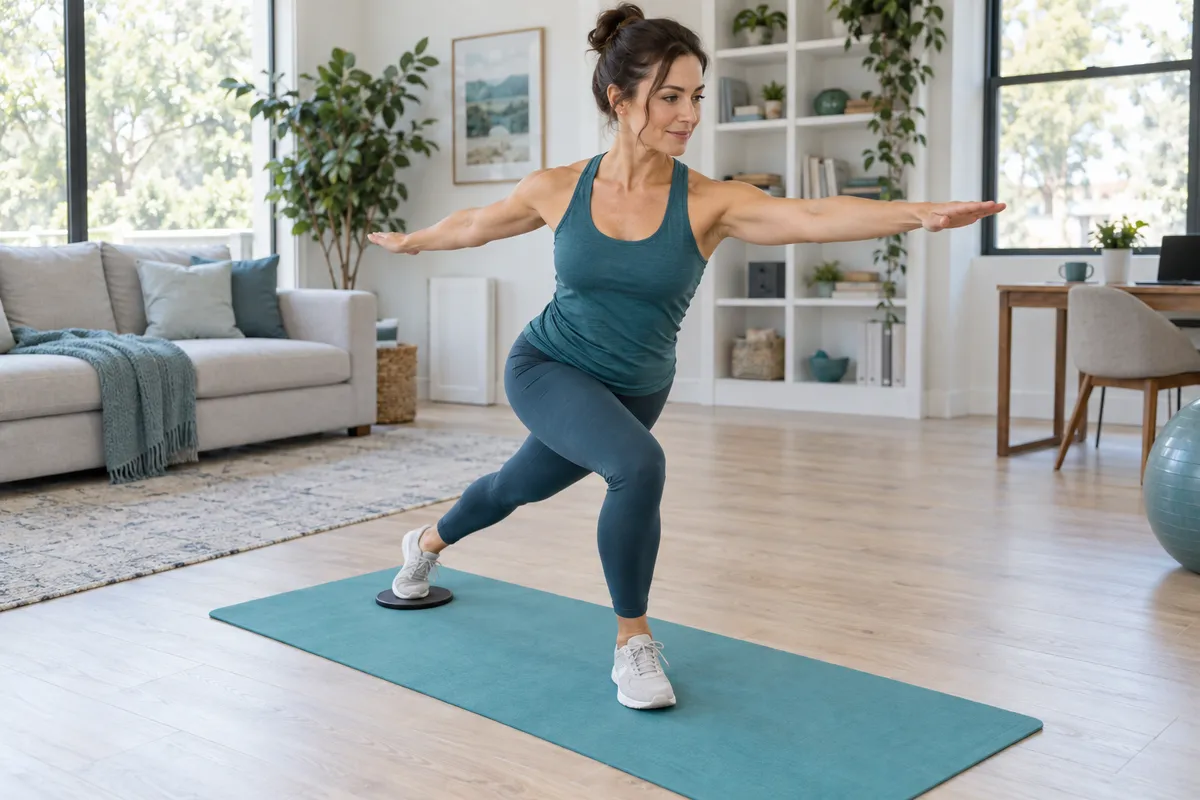
- Set your stance. Stand tall on one leg with a soft bend in the knee, and keep your weight centered over your foot.
- Move the free leg like you're pushing a scooter. Reach the other leg back and return it under control, rather than swinging.
- Add the rotation. Once the leg movement feels steady, let your upper body turn as you move, keeping your hips as controlled as you can.
- Go slowly. Slow reps are harder to cheat and teach you more about where you wobble.
- Switch sides. Spend equal time on each leg, and notice whether one side is clearly less steady. That's useful information.
If you feel unstable or have a condition that affects your balance, check with a physiotherapist or doctor before starting.
How to Progress It
The article describes beginner, slider and dumbbell progressions. A sensible way to think about them:
Beginner
Keep a hand on a wall or chair, shrink the movement, and focus on staying tall. Confidence comes before range.
With a slider
A slider lets your free foot glide along the floor, which changes how the leg moves and challenges control. Use it once the basic version feels steady without support.
With a dumbbell
Holding a weight adds load to the rotation and makes the standing leg and core work harder. Go light and only add it when your balance is reliable.
Move up one step at a time. If your form falls apart, go back a level; that's the practice working, not failing.
Make It a Daily Habit
The appeal of a "one move a day" approach is that it removes the barrier of a full workout. A few ways to make it stick:
- Anchor it to something you already do. Try it while the kettle boils or after brushing your teeth.
- Keep it short. A small amount done daily beats a long session you skip.
- Hold onto something at first. Safety first, then challenge.
- Notice the change. Over weeks, pay attention to whether steps, turns and stairs feel more secure.
Who Benefits
The original piece is aimed at people thinking about healthy aging, but balance and lower-body strength matter at any age. If you sit for much of the day, have stiff hips or just want to feel more coordinated, a rotation-based balance drill is a gentle place to start.
The Takeaway
Pick a spot near a wall tomorrow, try a few slow scooter reps on each leg, and see which side wobbles more. That small bit of awareness is where better balance begins.