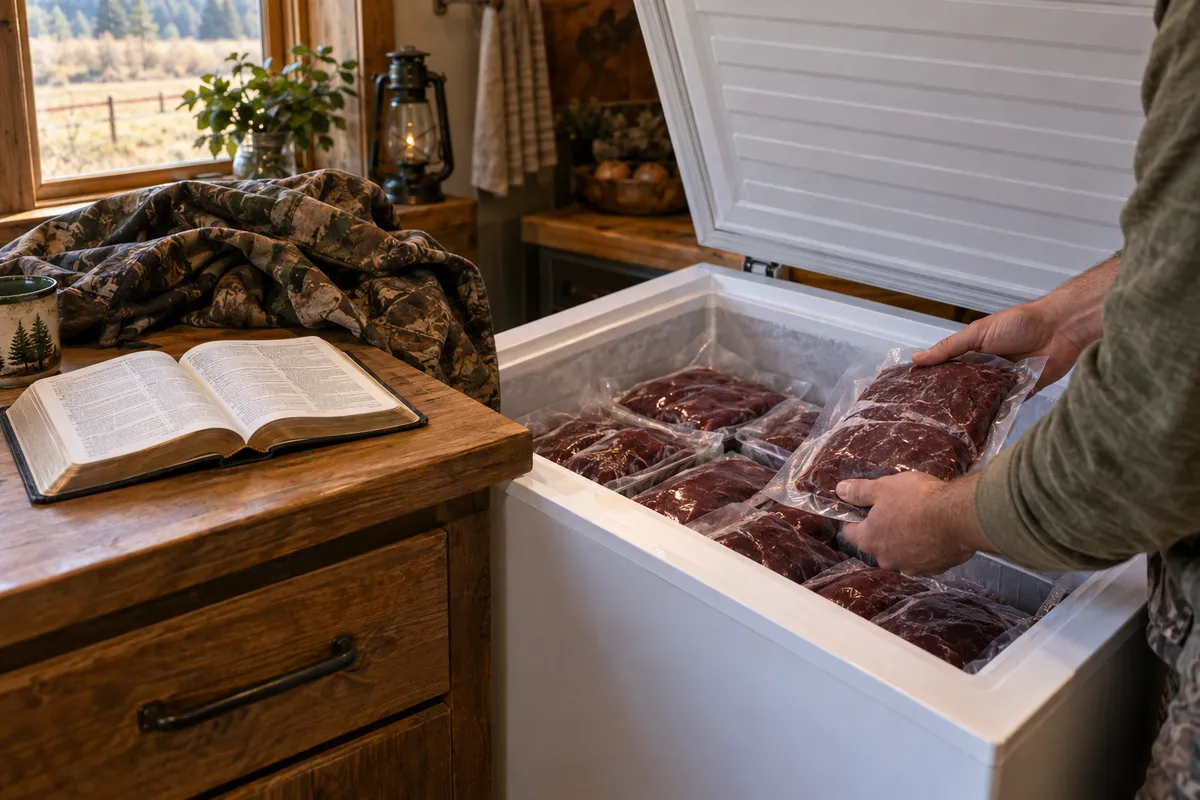
Pastors and twins James and Chad Hampton fill their freezer with venison every year, and they say the habit is tied to both their faith and their sense of physical and spiritual well-being, according to Fox News Digital. You don't have to hunt to borrow the idea. By the end of this piece, you'll have a few practical ways to bring a "field to freezer" mindset into your own kitchen and routine.
The details below come from Fox News Digital's report, which is brief on specifics. Where I go beyond what the Hamptons said, I'll flag it as my own take.
The Core Idea: Know Where Your Food Comes From
Per Fox News Digital, the Hamptons connect their outdoor lifestyle to how their families eat. Their venison isn't a novelty; it's something they stock up on yearly. The appeal of "field to freezer" is simple: you can trace your meat from start to finish.
That's a useful lens even if you shop at a regular grocery store. Most of us eat meals with a murky backstory. Closing that gap, even partly, tends to make you more deliberate about what lands on your plate. That's my observation, not the Hamptons' claim, but it's a good test to run on your own habits.
Venison as an Alternative to Highly Processed Food
Interest in self-sufficiency and cleaner eating keeps growing, especially among people looking for alternatives to highly processed food. Venison fits that conversation because it's a whole-food protein you can cook simply.
If you want to try it without hunting:
- Ask a local butcher whether they carry venison or can point you to a reputable source.
- Start with a simple preparation. Think a basic skillet sear or a slow-cooked stew, with minimal ingredients.
- Cook it as a swap, not a overhaul: replace beef in one weekly meal and see how your household responds.
If you do hunt, or know someone who does, follow your local regulations and safe handling guidance for game meat.
Stewardship: Eating With Intention
The Hamptons are pastors, and for them the outdoors and the table are part of how faith shows up in daily life, per Fox News Digital. You can read that as a broader principle of stewardship: using what you have with care and not wasting it.
You can practice that without a rifle or a religious framework:
- Plan meals around what's already in your freezer before buying more.
- Use the whole ingredient. Bones become broth, vegetable scraps become stock.
- Buy larger cuts or bulk portions and divide them at home so nothing spoils.
The point isn't perfection. It's treating food as something valuable, not disposable.
Gratitude as a Wellness Habit
A pause before a meal is one of the simplest mindfulness practices there is. When food takes real effort to obtain, gratitude comes naturally. When it arrives in a plastic tray, you have to build the pause on purpose.
Try this: before your next dinner, take ten seconds to name where the main ingredient came from and who handled it along the way. It costs nothing and slows you down enough to actually taste the meal.
Outdoor Time Counts as Part of the Diet
The Hamptons describe their outdoor lifestyle as supporting both physical and spiritual well-being, per Fox News Digital. Hunting involves long stretches of walking, waiting, and paying attention, which is a different pace from a typical screen-heavy day. That pace is the transferable part.
You can get a version of it with:
- A weekly walk or hike with no headphones
- A family outing that ends with cooking something together
- Gardening, foraging where it's legal and safe, or visiting a farmers market
If you do hunt with kids, that shared time can become a regular family rhythm. Again, that's my suggestion, not something the Hamptons detailed in the report.
What Not to Take Away
The report doesn't claim venison cures anything, and it doesn't offer nutrition data, so don't treat it as a health prescription. Hunting isn't for everyone, and it isn't the only route to eating thoughtfully. What the Hamptons model is a connection between values and food, not a single required method.
Your Next Step
Pick one meal this week and trace it. Find out where the main ingredient came from, cook it simply, and say thanks before you eat. That small loop of awareness is the heart of field to freezer, and it works whether your protein comes from a deer stand or a butcher counter.