If you follow healthy aging, you've probably heard of telomeres, the protective caps on the ends of your chromosomes. This week, a discovery reported by Phys links them to an unlikely source: bacteria fighting off viruses. By the end of this article, you'll understand what the new system is, why it matters for the science of aging, and how to read the hype with a clear head.
What Columbia scientists found
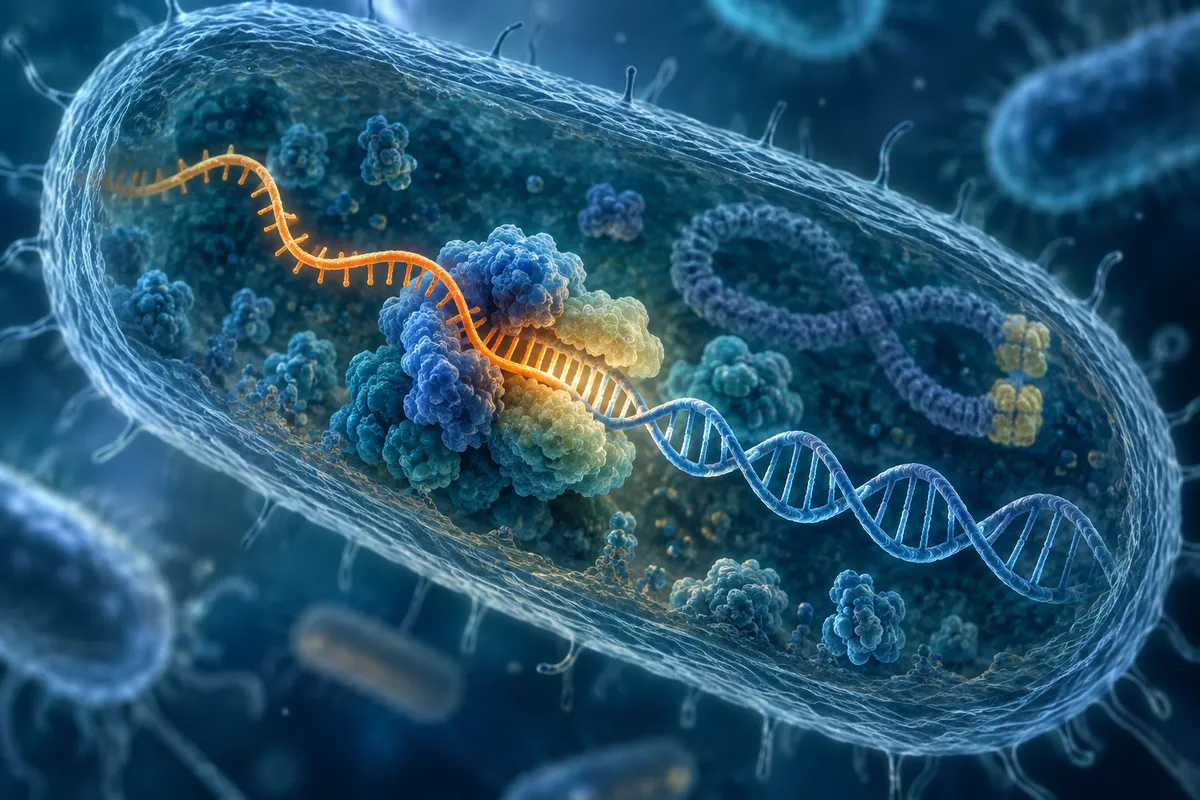
Per Phys, scientists at Columbia discovered a new antiviral defense system in bacteria called DRT10. It relies on reverse transcriptase, an enzyme that writes DNA using RNA as the template.
That's different from the best-known gene-editing tool, CRISPR, which works by cutting DNA. DRT10 writes it instead.
The twist: researchers found that DRT10 resembles telomerase, the enzyme that protects the ends of human chromosomes. That suggests an ancient evolutionary link between a microbial defense against viruses and a piece of our own cellular machinery.
Cutting versus writing: why the difference matters
Think of CRISPR as scissors. It's powerful, but its core action is a cut.
DRT10 is closer to a pen. It builds new DNA from an RNA blueprint. According to the report, that points toward a new class of DNA-writing tools, and the Columbia team's work suggests it could one day be adapted into a gene editor.
This is early-stage science. The source describes a possible future adaptation, not a treatment you can access or a result proven in people.
Why telomeres matter for aging and cancer
Every time a cell divides, it needs its chromosomes intact. Telomeres cap the ends of those chromosomes, and telomerase is the enzyme that protects them. Per the report, telomerase is central to both aging and cancer.
That's why the new finding is interesting. If a bacterial system resembles telomerase, telomerase may be part of a much older story about defending against viruses, not only about human cell lifespan.
The Columbia researchers suggest the work could eventually inform a gene editor that slows aging in our cells and improves cancer therapies. The report also points to potential relevance for telomere-related diseases and cancer immunotherapy. One idea raised is whether longer-lasting CAR-T cells could improve cancer therapy. That remains a question, not a result.
How to read this kind of news
Headlines about "anti-aging breakthroughs" tend to run ahead of the evidence. A few habits help:
- Look for the verb. "Could be adapted" and "may one day" mean a lab discovery, not a therapy.
- Separate mechanism from outcome. Understanding how DRT10 works is a real advance. Slowing aging in people is a far bigger claim that hasn't been shown.
- Be wary of products. Nothing here supports a supplement or treatment. Be skeptical of anyone who cites this to sell one.
What you can do with it today
The science of chromosome protection is fascinating, but your daily habits still do the work you can control. Sleep, movement, nutrition, and stress management are the established foundations of healthy aging, and none of them require a gene editor.
Use stories like this as a reminder of how much we're still learning. A defense system in bacteria just suggested that the machinery guarding your chromosomes has roots far older than humans. Stay curious, stay skeptical, and keep building the habits that support your cells right now.