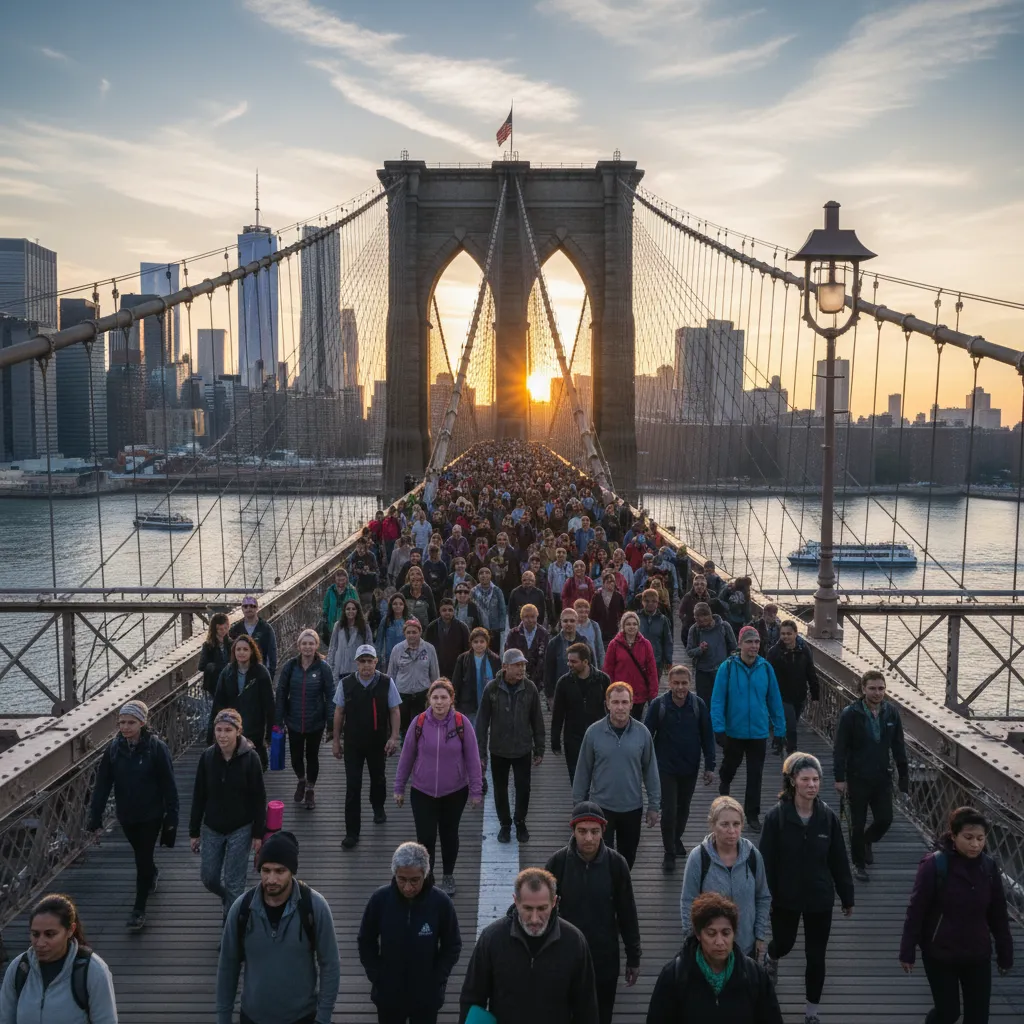
More than 1,000 people brought a quiet but powerful energy to Lower Manhattan and Brooklyn as they joined a mindful walk across the Brooklyn Bridge for the NYC Buddhist Festival, turning one of New York City's busiest landmarks into a moving symbol of peace, reflection and community connection.
The gathering highlighted the growing visibility of Buddhist communities across New York City. It also showed how mindfulness practices can move beyond temples, meditation halls and private routines. For many participants, the walk offered a rare chance to slow down in public, share a spiritual experience and reflect on compassion in the middle of a fast-moving city.
A mindful walk across an iconic New York landmark
The Brooklyn Bridge has long represented connection. It links boroughs, neighborhoods, histories and daily lives. During the NYC Buddhist Festival, that meaning became even deeper. Participants walked with intention across the bridge, using each step as a reminder to breathe, listen and remain present.
Unlike a typical march or parade, the event centered on calm awareness. The atmosphere was peaceful, but it remained deeply visible. Monastics, lay practitioners, families, students and supporters moved together across the span. Their presence created a striking contrast with the usual rush of commuters, tourists, cyclists and traffic nearby.
The walk also introduced many New Yorkers to Buddhist practice in an open and accessible way. Some attendees were longtime practitioners. Others came to experience mindfulness for the first time. That mix gave the event a welcoming tone and reflected the diversity of Buddhist life in the city.
NYC Buddhist Festival draws a broad community
The NYC Buddhist Festival brought together more than 1,000 participants, including community members from different cultural backgrounds and Buddhist traditions. New York is home to a wide range of Buddhist communities, including Theravada, Mahayana, Vajrayana and Zen practitioners. Events like this help those groups gather around shared values while honoring their distinct histories.
Buddhism in New York is not limited to one neighborhood or one immigrant story. It includes temples serving Asian diasporic communities, meditation centers with interfaith audiences, youth groups, social service organizations and independent practitioners. The festival gave that broad community a public meeting place.
At its heart, the event centered on values that cross religious and cultural lines. Compassion, nonviolence, generosity and mindful living shaped the day. Those ideas resonated strongly in a city where people often search for balance while facing stress, noise and social pressure.
Why mindfulness mattered at the event
Mindfulness is often described as paying attention to the present moment without judgment. During the bridge walk, that idea became an active practice. Participants did not simply talk about awareness. They used movement, breath and shared silence to practice it together.
Walking meditation has deep roots in Buddhist traditions. It invites people to treat each step as part of the practice. Rather than rushing toward a destination, walkers notice the body, the ground, the breath and the surrounding world. In a place as busy as the Brooklyn Bridge, that practice carried special meaning.
The event reminded attendees that mindfulness does not require perfect silence. It can happen amid the sounds of the city. Sirens, conversations, wind, footsteps and traffic all became part of the moment. That message matters in New York, where quiet can be hard to find.
A public call for peace and compassion
The mindful walk also served as a peaceful public message. In a time when many communities face division, grief and uncertainty, the festival offered a different kind of civic gathering. It was not centered on conflict. It focused on healing, unity and shared humanity.
Participants used the occasion to promote compassion in daily life. That message can feel simple, but it carries real weight. Compassion influences how people treat neighbors, strangers, family members and themselves. It can shape public spaces and community relationships in practical ways.
The bridge setting helped amplify that message. Thousands of people use the Brooklyn Bridge each day. By walking mindfully across it, participants placed spiritual practice in the open. They showed that peace is not only a private goal. It can also be a public expression.
Brooklyn's role in New York's Buddhist landscape
Brooklyn has become an important home for Buddhist practice, cultural exchange and spiritual exploration. The borough's diversity makes it a natural place for gatherings that bring together people from many backgrounds. From immigrant-led temples to contemporary meditation spaces, Brooklyn reflects the changing shape of Buddhism in America.
The festival's connection to the Brooklyn Bridge underscored Brooklyn's role in the wider city. The bridge is more than infrastructure. It is a cultural landmark that carries emotional meaning for residents and visitors. Using it as the route for a mindful walk gave the event a strong sense of place.
For Brooklyn residents, the event also offered a reminder that spirituality can be part of public life. It does not need to remain hidden behind closed doors. Community rituals, when organized with care, can enrich shared spaces and invite deeper understanding.
Intergenerational participation added to the impact
One of the most meaningful aspects of the gathering was its intergenerational character. Events like the NYC Buddhist Festival often attract elders, young adults, children and families. That mixture helps preserve cultural traditions while allowing younger participants to engage with them in modern settings.
For children and youth, seeing more than 1,000 people participate in a mindful walk can be powerful. It shows that spiritual practice is not isolated or outdated. It can be communal, relevant and visible. It can also offer tools for dealing with stress and uncertainty.
For elders, the gathering affirmed the importance of passing down values. Patience, mutual respect and compassion are not only teachings. They are habits that grow through practice. A public walk gives those values movement, structure and shared meaning.
Mindfulness in New York City continues to grow
The strong turnout reflected broader interest in mindfulness across New York City. Meditation classes, wellness programs, school-based mindfulness efforts and community retreats have become more common in recent years. Yet a large public walk adds something different. It transforms mindfulness from an individual wellness activity into a collective civic practice.
That shift matters. When practiced only as self-improvement, mindfulness can become narrow. When practiced in community, it can encourage empathy and social awareness. The NYC Buddhist Festival demonstrated that mindfulness can support both personal calm and public connection.
The event also offered a reminder that Buddhist traditions have shaped mindfulness for centuries. While many people now encounter mindfulness through wellness culture, its roots are spiritual and ethical. The festival helped reconnect the practice with compassion, discipline and community care.
A festival shaped by presence, not spectacle
New York City is known for large events filled with sound, speed and performance. This gathering stood out because its power came from restraint. The mindful walk did not need loud displays to make an impression. Its strength came from collective attention.
That does not mean the festival lacked energy. The turnout itself created momentum. More than 1,000 people walking together with shared intention is a memorable sight. Still, the focus remained on presence rather than spectacle.
This approach gave the event a distinct identity within the city's busy cultural calendar. It invited people to participate, observe and reflect. It also showed how public gatherings can be meaningful without becoming overwhelming.
What the NYC Buddhist Festival represents
The NYC Buddhist Festival represented more than a single day of walking. It reflected the growth of Buddhist communities, the importance of interfaith understanding and the city's ongoing search for spaces of peace. It also showed how cultural and spiritual events can strengthen neighborhood connections.
For participants, the walk may have offered personal renewal. For observers, it may have sparked curiosity. For the broader city, it provided a visible reminder that calm, kindness and awareness still have a place in public life.
As New York continues to face the pressures of urban life, events like this provide a meaningful counterbalance. They encourage people to pause, breathe and recognize one another. The Brooklyn Bridge walk showed that a simple act, taken together, can carry a powerful message.
Conclusion
The mindful walk across the Brooklyn Bridge for the NYC Buddhist Festival brought more than 1,000 people together around peace, compassion and shared awareness. In one of the world's busiest cities, the event created room for stillness and connection. Its impact reached beyond the bridge, offering a timely reminder that mindfulness can shape both personal lives and public spaces.